




15
+
YEARS OF
EXPERIENCE
1000
+
SUCCESSFUL
Projects
80
+
Satisfied
Clients
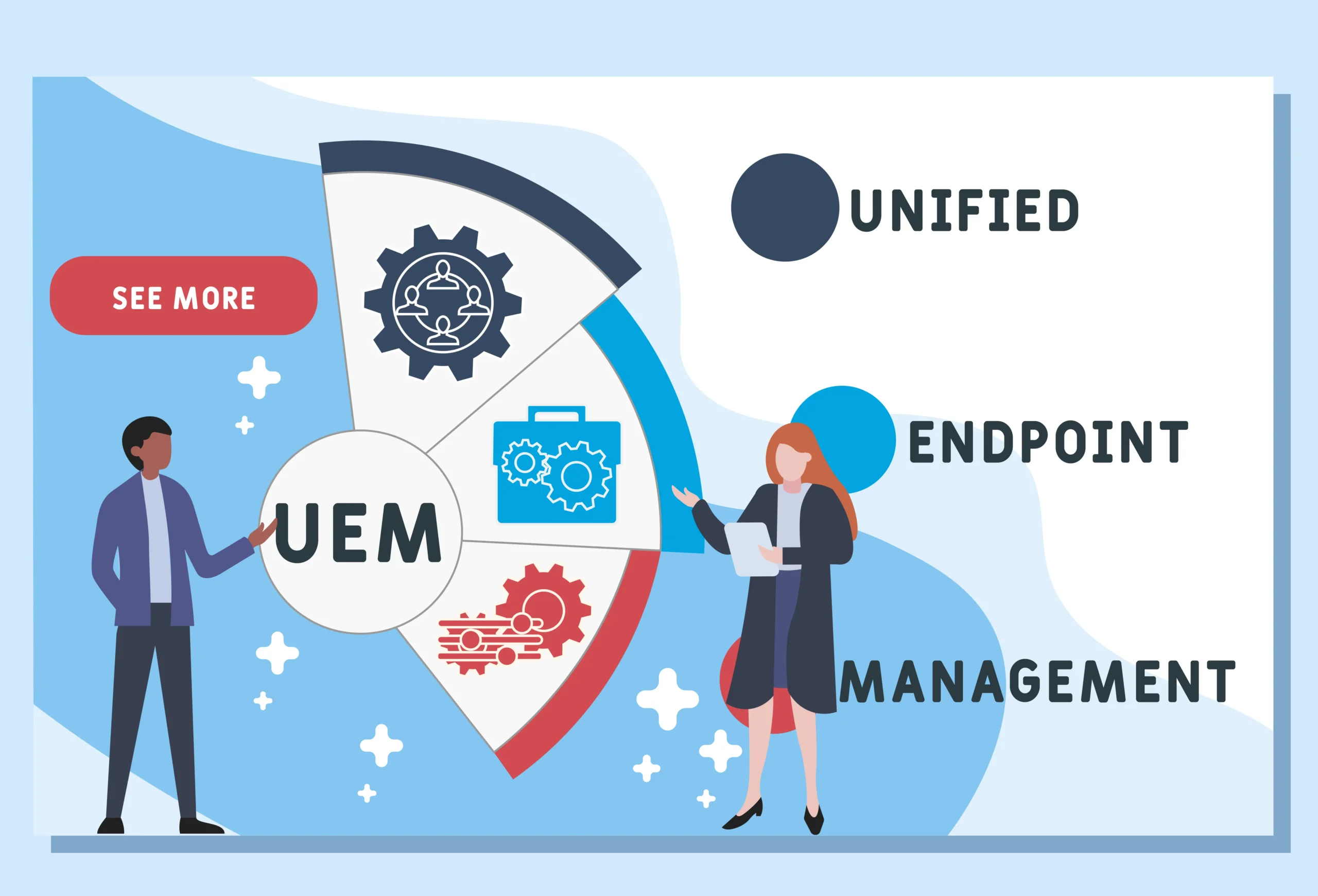
In today’s fast-paced digital landscape, managing a multitude of devices securely and efficiently has become a critical priority for businesses. Unified Endpoint Management (UEM) offers a consolidated platform to control all endpoints-from smartphones and laptops to IoT devices-under a single management umbrella. This integrated approach not only boosts operational efficiency but also enhances security compliance across diverse device environments. As organisations grapple with increasingly complex IT infrastructures, UEM emerges as a cornerstone of modern enterprise management.
Understanding unified Endpoint management: The Foundation of Modern IT Control
Unified Endpoint Management (UEM) represents the evolution of enterprise device management by integrating multiple endpoint platforms into one streamlined interface. Unlike customary Mobile Device Management (MDM) or client management tools that focus on specific device types or operating systems, UEM provides holistic oversight of all endpoints-ranging from desktops, laptops, mobile devices, to IoT and wearables. This consolidated approach enables IT teams to deploy policies, software updates, and security measures uniformly, reducing fragmentation and simplifying management. UEM solutions leverage cloud-based architectures to provide real-time insights into device health, compliance status, and user activities. They support diverse operating systems including Windows, macOS, Android, and iOS, making them versatile for heterogeneous IT ecosystems. With UEM, organisations gain granular control over submission management, data protection, and remote troubleshooting. This ensures consistent security postures and faster response to emerging threats, especially important in environments where remote work and Bring Your Own Device (BYOD) policies are prevalent.
At Proxar IT Consulting, we understand the complexities of managing modern enterprise endpoints. Our tailored UEM strategies are designed to give businesses a competitive edge by streamlining device control, improving security stance, and reducing operational overhead.


Benefits and Challenges of Implementing Unified Endpoint Management (UEM)
Unified Endpoint Management (UEM) plays a critical role in strengthening enterprise security while improving IT operational efficiency. Below is a structured guide outlining the key benefits and challenges organisations should consider when adopting a UEM strategy.
Key Benefits of Unified Endpoint Management
- Consistent Security Policy Enforcement
UEM enables organisations to apply uniform security policies across all endpoint devices, regardless of operating system or user location, significantly reducing the risk of data breaches, unauthorised access, and compliance violations. - Centralised Endpoint Visibility and Control
A single management console allows IT teams to monitor, manage, and secure all endpoints efficiently, improving oversight and simplifying governance. - Faster Patch and Vulnerability Management
Centralised patch deployment and automated updates help ensure devices remain protected against emerging threats and known vulnerabilities. - Improved User Productivity
UEM supports secure, seamless access to corporate resources while maintaining compliance, enabling employees to work effectively across devices. - Operational Efficiency and Cost Reduction
Automation of routine tasks, remote device configuration, and streamlined application management reduce manual workloads and lower support costs. - Scalability for Growing Enterprises
UEM platforms can easily adapt to changing device inventories, supporting business growth, remote work, and evolving operational needs.
Challenges to Anticipate When Implementing UEM
- Migration from Legacy Systems
Transitioning from traditional or fragmented endpoint management tools can be complex and requires careful planning to avoid disruptions. - Device and Platform Compatibility
Managing a wide range of device types and operating systems may introduce technical challenges that must be addressed during implementation. - Initial Investment and Training
Deploying a UEM solution involves upfront costs related to licensing, integration, and staff training. - Balancing Security and User Experience
Defining comprehensive security policies that protect assets without negatively impacting usability requires coordination across IT and business teams.
Expert Guidance for Successful UEM Adoption
Proxar IT Consulting partners with organisations to overcome UEM implementation challenges through tailored strategies and expert support. By aligning UEM deployments with business objectives, our consultants help enterprises enhance security, optimise device performance, and maintain regulatory compliance within a unified and scalable management framework.
The strategic investment in Unified Endpoint Management pays off by reducing endpoint vulnerabilities and streamlining IT workflows. A well-executed UEM deployment enables organisations to anticipate security risks proactively while supporting a mobile and remote workforce effectively. Our expertise at Proxar IT ensures your transition to UEM is smooth and that your business enjoys maximum value from the investment.
Case Studies in Unified Endpoint Management: Real-World success Stories and Practical Applications
Several organisations have transformed their IT management approach through Unified Endpoint Management, illustrating its practical advantages across industries. For example, a financial services firm partnered with Proxar IT Consulting to deploy a UEM solution that unified its device fleet spanning Windows desktops, Apple laptops, and Android mobile devices. Post-implementation, the firm reported a 35% reduction in security incidents related to endpoint vulnerabilities and a 40% enhancement in IT helpdesk response time. Centralised policy enforcement cut compliance audit preparation from days to mere hours.
In another case, a healthcare provider utilised UEM to secure sensitive patient data across multiple clinics. The platform’s remote management capabilities allowed IT staff to enforce encryption standards and swiftly revoke access on compromised devices, ensuring GDPR and HIPAA compliance. These proactive measures enhanced patient confidentiality and reduced data breach risks.
Such success stories highlight the versatility of UEM solutions tailored by Proxar IT Consulting. By integrating endpoint management with advanced analytics and automation, we help IT leaders maintain complete visibility and control over diverse device environments. Whether managing a hybrid workforce or securing IoT endpoints, UEM empowers businesses to meet their unique challenges with confidence and agility.

answer time
satisfaction
score
on initial call
same business
day
Maximising Business Potential with Unified Endpoint Management strategies
Unified Endpoint Management is not simply about managing devices-it is indeed about unlocking business agility, enhancing security, and driving digital change. Organisations that adopt comprehensive UEM strategies position themselves to respond swiftly to market changes, support evolving workforce demands, and protect valuable data assets. Proxar IT Consulting stands ready to partner with enterprises at every stage of UEM adoption, from initial assessment and design to deployment and ongoing optimisation.
By embracing UEM, businesses reduce complexity, minimise blind spots, and accelerate innovation cycles. The integration of endpoint management into a single platform enables IT teams to focus on strategic initiatives rather than firefighting device issues. This shift drives cost efficiencies and bolsters compliance adherence amid a landscape of ever-tightening regulations.
To explore how Proxar IT Consulting can help your organisation harness the full benefits of Unified Endpoint Management, we invite you to connect with us today. Our team is dedicated to delivering tailored solutions that meet your unique IT requirements and propel your enterprise forward.
For more information or personalised advice, please visit our contact us page and get in touch with our experts. Together, let’s make your endpoint management seamless, secure, and future-ready.